Plate Bearing Test
The plate bearing test is an on-site investigation field test used for determining the ultimate bearing capacity of the ground and the likely settlement under a given load.
While site investigations for most projects consider ground conditions at depth, the strength and variability of the near surface ground is critical for the design and operation of working platforms. The plate bearing test is typically used in the design of temporary working structures such as working platforms for piling rigs or pads for crane outriggers. Approximate equivalent CBR values can be derived from the Modulus of sub grade reaction by use of mathematical relationship.
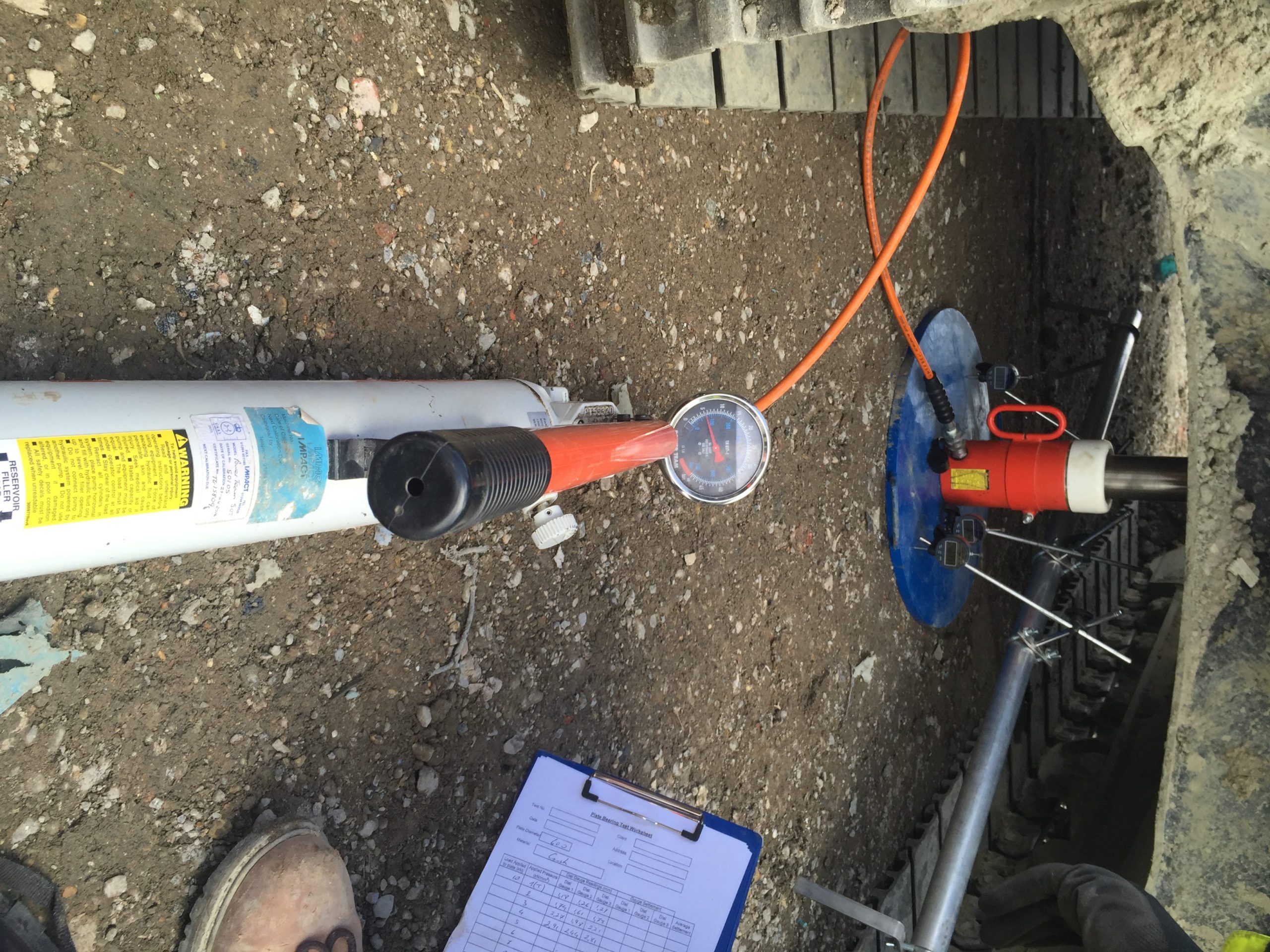
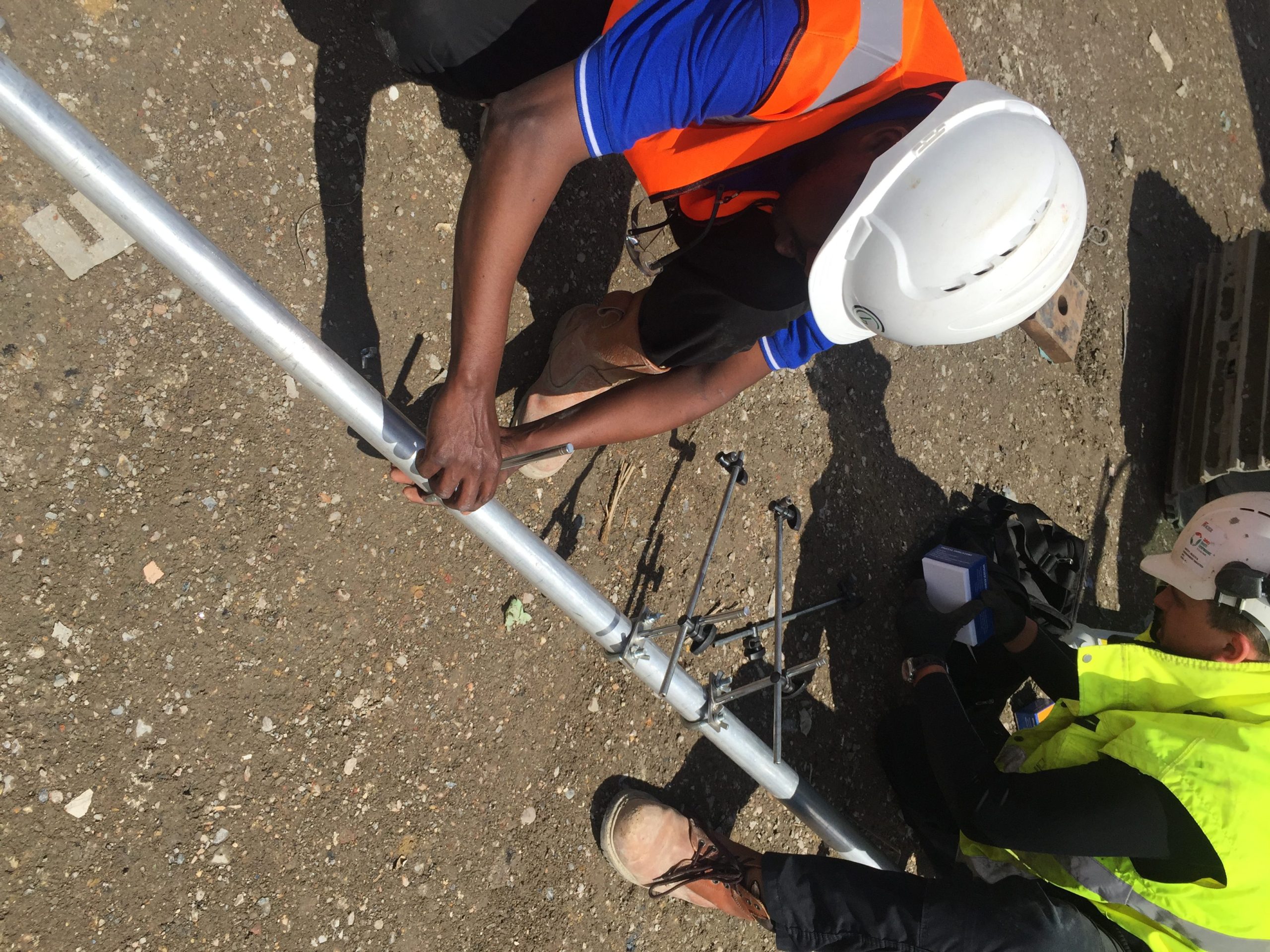
The Plate Bearing Test is carried out in accordance with British standard 1377 Part 9: 1990. It basically consists of loading a steel plate of known diameter and recording the settlements corresponding to each load increment. The test load is gradually increased till the plate starts to settle at a rapid rate. The total value of load on the plate divided by the area of the steel plate gives the value of the ultimate bearing capacity of soil. A factor of safety is applied to give the safe bearing capacity of soil.
The Plate Bearing Test is normally carried out at foundation level, either on the surface or in a shallow pit. Plates of varying sizes up to 750mm diameter are available. The loading plate is placed on the ground and connected via a load cell to a reaction load. Due to the larger size of the plate used (compared with a CBR test) this test is more suitable for testing larger aggregate backfills; however, it requires a larger reaction load. Typically, a minimum 14tonne tracked excavator or other suitable plant is required for us to use as a reaction load.
there are two types of plate bearing test, both of which offer extremely reliable results to the client. These are:
- Plate CBR Test (California Bearing Ratio)
- A Incremental Plate Load Test
Both of these are used to establish the vertical strength and stress load of different layers in construction being formation, subgrade, capping, sub-base and stabilised materials.
CTSL offers both of these on-site services throughout the UK. Furthermore – unlikely all too many who operate in our specific sector – we are UKAS accredited for both tests in accordance with BS1377-9:1900 and IAN73/06 and for the purpose of CD225 (Design for new pavement foundations) thus giving clients and 3rd parties the utmost surety and confidence that our processes and results are robust.
Our engineers will advise on the plate diameter required to match the anticipated design load and reaction load required (i.e. size of excavator) to be made available for us on site. We will typically complete 4-6 tests in a day subject to site conditions and can provide you with the results the following day.
Get in touch for a quote or to arrange a plate bearing test at your site by calling us on 0203 659 0524 or emailing us at info@concretetestingsolutions.co.uk.